
Turning sugar beet water into a new drinking water source
Tienen, Belgium
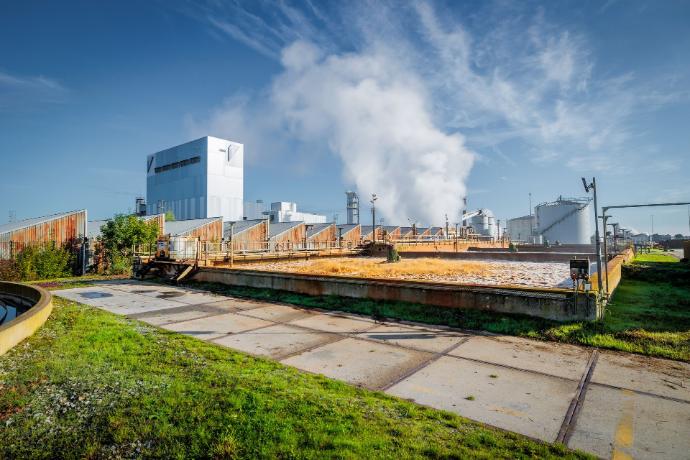
In Tienen, De Watergroep and Raffinerie Tirlemontoise are exploring how treated wastewater from sugar beet processing can become an additional source of drinking water. The NEW WATER pilot will test advanced treatment and monitoring processes to assess its potential for future supply to households and industry.
Pilot process
pilot feed flow rate
target reverse osmosis permeate output
wastewater generated by the refinery
Pilot flow rates are design targets; performance remains to be validated. The annual wastewater volume refers to the refinery as a whole.
Why sugar beet water, why Tienen?
Location: Raffinerie Tirlemontoise wastewater treatment plant, Tienen, Belgium
Project partners: De Watergroep and Raffinerie Tirlemontoise
Source: treated wastewater from sugar beet processing
Intended use: future drinking water supply to households and industry through the public distribution network
Flanders needs additional sources to strengthen its drinking water supply
Dense population, intensive agriculture and industrial activity put water resources in Flanders under pressure. Prolonged dry periods add to this challenge.
Meanwhile, sugar production in Tienen generates a substantial wastewater stream, mainly originating from sugar beets. De Watergroep and Raffinerie Tirlemontoise are investigating whether this treated water can become a reliable additional source of drinking water.
Collect
Use treated wastewater from sugar beet processing as the feed for the pilot.
Pre-treat
Apply biological treatment to further remove organic matter and nitrogen compounds.
Purify
Use ultrafiltration and reverse osmosis, and test additional treatment for persistent trace contaminants.
Validate
Collect the treated water in a clean water tank and monitor its quality to evaluate its suitability for drinking water production.
Testing the treatment train
Core treatment
A membrane aerated biofilm reactor provides biological pre-treatment to remove organic matter and nitrogen compounds.
Ultrafiltration then removes suspended solids and fine particles. Reverse osmosis provides a further barrier against salts and dissolved contaminants.
Targeted removal of trace contaminants
UV-based advanced oxidation and activated carbon filtration will be tested to assess the removal of persistent micropollutants, including 1,2,4-triazole.
The team will evaluate this additional treatment at different points in the process to identify the most effective configuration.
What the pilot will assess
Microbiological safety
How reliably does the treatment train remove viruses, bacteria and protozoa? The pilot will combine monitoring and risk assessment to validate treatment performance.
Trace contaminants
How effectively can the treatment remove persistent substances, including 1,2,4-triazole, pesticide residues and their transformation products?
Full-scale feasibility
What is needed for reliable and cost-effective operation at a larger scale? The pilot will also assess the management of concentrate and other treatment residuals.
An additional water source for Flanders
The Tienen pilot aims to provide the evidence needed to develop sugar beet processing water into an additional drinking water source. If successfully validated, the approach could be scaled up within the broader De Tiense Watervelden programme, combining improved wastewater treatment, seasonal storage and additional drinking water production infrastructure. The findings will also help De Watergroep assess opportunities at similar sites and diversify its future water sources.
NEW WATER can help you take the next step
Reach out and make your company more water-resilient.