
Giving greywater a new role in student housing
Birkenfeld, Germany
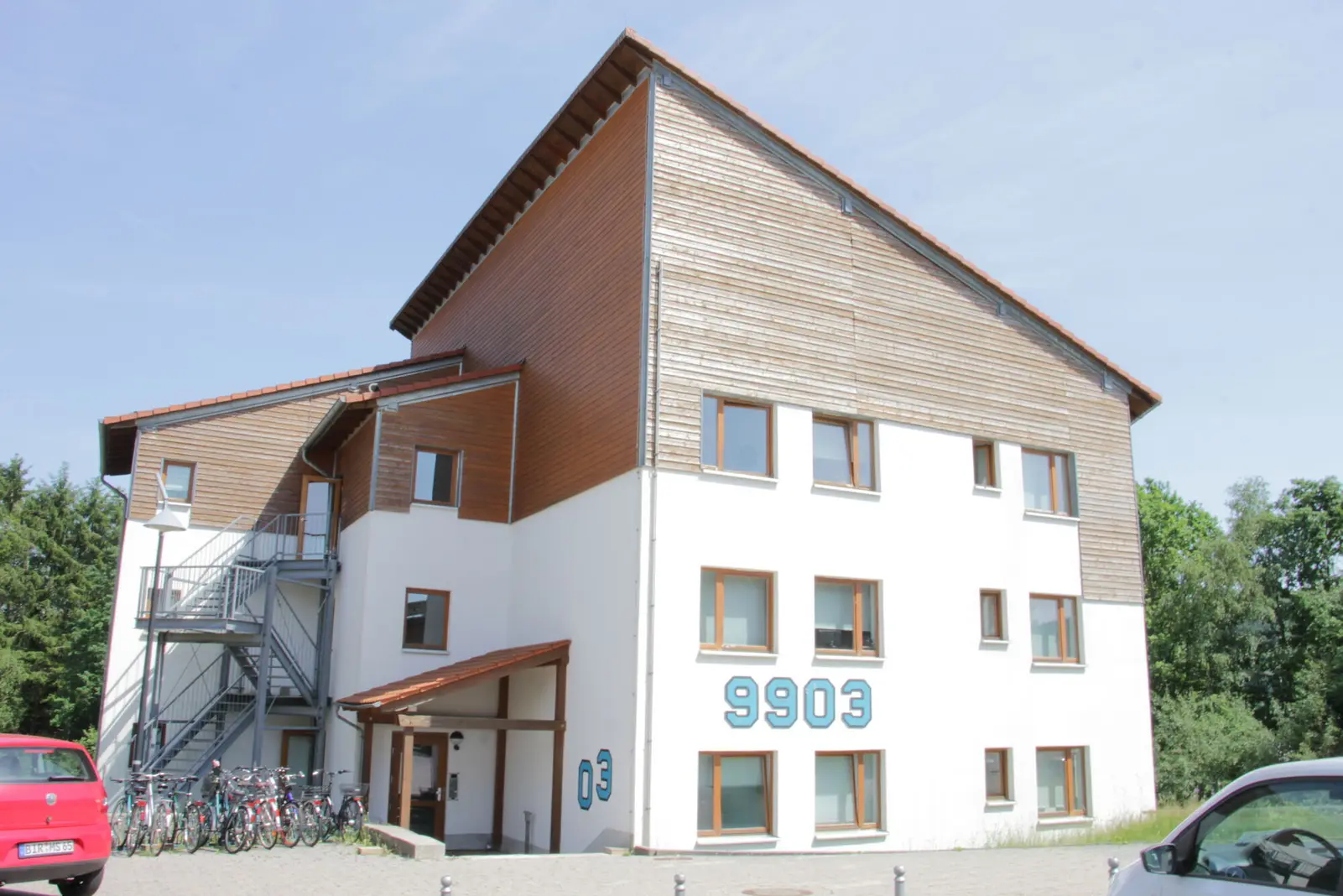
At the Environmental Campus Birkenfeld, water from showers, hand basins and kitchen sinks could become a resource for the same building. The NEW WATER pilot will test a treatment system designed to achieve drinking water quality, with reuse initially intended for toilet flushing, laundry and cleaning.
Alongside treatment performance, the project will explore what residents need to feel confident using locally recovered water.
Pilot process
capcity of the pilot dormitory
estimated greywater available at full occupancy
expected pilot start
Greywater availability is estimated at full occupancy. The start date is provisional, and treatment performance remains to be validated.
Why greywater, why Birkenfeld?
Location: Environmental Campus Birkenfeld, Germany
Pilot lead: Trier University of Applied Sciences, Institute for Applied Material Flow Management (IfaS)
Source: greywater from dormitory showers, hand basins and kitchen sinks
Intended use: toilet flushing, laundry and cleaning through the building’s service water system
Student housing offers an opportunity to close water loops within a building
Drought and growing water demand are increasing the need for alternative water sources. Residential buildings offer an opportunity to recover water close to where it is used.
The Birkenfeld dormitory already separates greywater from toilet wastewater and has a service water network used for rainwater flushing. This infrastructure provides a starting point for testing greywater treatment and reuse under everyday living conditions.
Collect
Collect greywater separately from showers, hand basins and kitchen sinks.
Pre-treat
Screen the collected water and use a grease separator if needed to protect the treatment system.
Treat and disinfect
Combine biological treatment in a membrane bioreactor with ceramic ultrafiltration and UV disinfection.
Store and reuse
Store the treated water for reuse in the dormitory through the service water network.
Combining treatment with water quality monitoring
Biological and membrane treatment
The preliminary treatment concept starts with screening and, if necessary, grease separation.
A membrane bioreactor provides biological treatment, followed by ceramic ultrafiltration. The pilot will assess how this combination performs as greywater composition changes during everyday use.
Disinfection and safe reuse
UV disinfection provides a further treatment step before the water is stored for reuse.
Monitoring tools and sensors will support risk management. The pilot will assess how to protect residents and the building’s infrastructure if water quality is insufficient or the system is used incorrectly.
What the pilot will assess
Variable greywater quality
How do changing concentrations of fats, oils, grease and other substances affect treatment? The pilot will assess when grease separation is needed and how to maintain reliable performance.
Water quality and safety
Can the system consistently achieve its drinking water quality objective? Treatment validation and monitoring will assess the conditions needed for safe storage and reuse.
Resident acceptance and affordability
What helps residents feel confident using treated greywater? The pilot will also assess whether investment, operation and maintenance costs are feasible for student housing.
Making local water reuse part of residential life
The pilot aims to reduce demand for conventional drinking water by recovering greywater within the dormitory. It will test how treatment technology, existing building infrastructure and resident participation can work together in practice.
The findings could support similar systems in student housing, residential buildings, company campuses and other institutional buildings. Lessons on treatment performance, grease management, monitoring and user acceptance will help inform wider application across North-West Europe.
NEW WATER can help you take the next step
Reach out and make your company more water-resilient.