
Recovering water from organic household waste
Dendermonde, Belgium
In Dendermonde, waste management company VERKO is exploring how wastewater from organic household waste treatment can become a local water source. The NEW WATER pilot combines biological treatment and membrane filtration to produce water for on-site industrial processes and investigate drinking water production for a new office building.
Pilot process
target treatment flow
share of treated water intended for on-site reuse
served by VERKO
Treatment and reuse figures represent pilot targets; performance remains to be validated.
Why recover water from organic waste in Dendermonde?
Location: VERKO organic waste treatment facility, Dendermonde, Belgium
Pilot lead: VERKO
Source: percolate and wastewater from organic household waste treatment, together with contaminated on-site rainwater runoff
Intended use: on-site industrial processes and drinking water production for a new office building
Closing a local water loop as freshwater resources come under pressure
VERKO processes organic household waste through composting and anaerobic digestion. These activities generate wastewater and percolate: liquid that drains through the organic material and contains high concentrations of organic matter and nutrients.
This water is currently treated on-site before discharge to the river Schelde. As Flanders faces increasing water scarcity and drought, VERKO is investigating how further treatment could turn this stream into a useful local resource and reduce demand for conventional water supplies.
Collect
Bring together percolate, wastewater and contaminated rainwater runoff in a buffer tank.
Treat biologically
Remove organic matter and nutrients, with sludge separated for further handling and disposal.
Filter and purify
Apply drum screen filtration, ultrafiltration and reverse osmosis to progressively improve water quality.
Store and reuse
Store the reverse osmosis permeate for on-site reuse and evaluate its suitability for drinking water production.
Combining biological treatment and membrane filtration
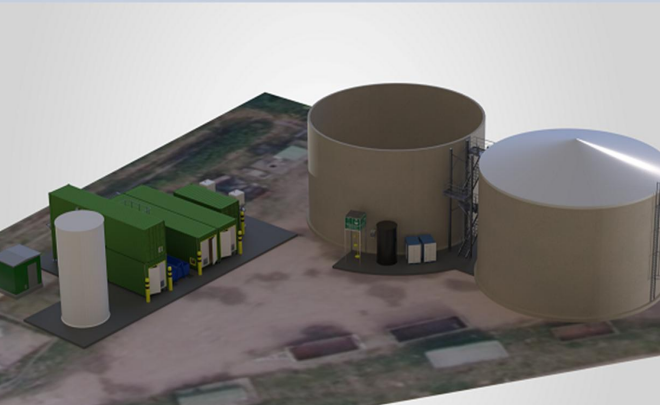
Biological treatment and nutrient removal
The wastewater contains high and variable concentrations of organic matter, nitrogen and phosphorus.
Biological treatment reduces these loads before the water reaches the membrane systems. Maintaining stable treatment performance and suitable sludge characteristics is essential to protect the downstream membranes.
Filtration and water recovery
Drum screen filtration and ultrafiltration remove suspended material and fine particles before reverse osmosis provides further purification.
The resulting permeate is stored for reuse. Options for using the remaining concentrate will also be explored, including in the composting process during dry periods.
What the pilot will assess
Variable wastewater quality
How do changes in organic matter and nutrient concentrations affect treatment performance? The pilot will assess how to maintain stable operation with this challenging water source.
Water quality and safety
Can the treatment consistently produce water suitable for its intended uses? Monitoring and treatment validation will assess microbiological safety and the drinking water quality objective.
Operational feasibility
How can biological treatment and membrane filtration work reliably together while limiting membrane fouling? The pilot will also assess investment costs, energy use and operating expenses.
Making water recovery part of everyday waste treatment
The pilot aims to reduce VERKO’s dependence on conventional water sources by recovering water for use on-site. It will also explore how this water could support the supply of a new office building.
Where suitable, concentrate could be reused in composting during dry periods. Surplus purified water could potentially be stored for agricultural use or municipal green space management.
Operating within VERKO’s day-to-day activities, the pilot will generate practical knowledge for similar composting and organic waste treatment facilities across North-West Europe.
NEW WATER can help you take the next step
Reach out and make your company more water-resilient.