
Turning industrial wastewater into a new water source for Loudéac
Loudéac, France
In Loudéac, Brittany, treated wastewater could help meet the water needs of local industry. The NEW WATER demonstration will combine advanced filtration, reverse osmosis and disinfection to produce water of drinking water quality for industrial use.
Led by Loudéac Communauté Bretagne Centre, the project aims to reduce demand for conventional drinking water supplies in a region with a strong agri-food sector.
Pilot process
target demonstration output
planned treatment flow
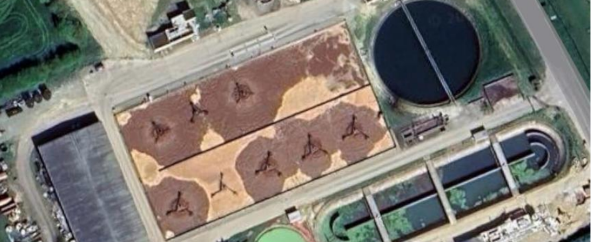
connected to the existing Calouët treatment plant
Production and treatment figures are design targets; performance remains to be validated.
The number of connected companies refers to the existing wastewater treatment plant.
Why industrial wastewater, why Loudéac?
Location: Calouët wastewater treatment plant, Loudéac, Brittany, France
Pilot lead: Loudéac Communauté Bretagne Centre
Source: treated wastewater, mainly from food processing and related industries
Intended use: water of drinking water quality for industrial applications
A strong agri-food sector needs a more resilient water supply
Loudéac’s food processing and dairy industries depend on substantial water supplies and generate large wastewater flows. The severe drought of 2022 highlighted the region’s vulnerability and strengthened efforts to develop alternative water sources.
The Calouët treatment plant receives wastewater from local businesses and households. By adding advanced treatment, Loudéac Communauté aims to recover part of this water for industry and ease pressure on conventional drinking water resources.
Collect
Take treated effluent from Calouët following the plant’s existing physico-chemical and biological treatment processes.
Filter
Apply multimedia filtration and ultrafiltration to remove remaining suspended material and fine particles.
Purify
Use reverse osmosis and UV disinfection to further improve water quality.
Store and supply
Store the purified water and pump it into a distribution system for industrial reuse.
Building advanced purification onto existing treatment
Existing wastewater treatment
Calouët combines flow equalisation, physico-chemical treatment and biological treatment using activated sludge.
Clarification and further physico-chemical treatment prepare the effluent for the additional purification stages. The demonstration will assess how variations in industrial discharges affect downstream performance.
Advanced treatment for reuse
Multimedia filtration and ultrafiltration provide further removal of particles before reverse osmosis and UV disinfection.
The purified water is then stored and pumped for distribution. This treatment sequence will be evaluated against the water quality requirements of its intended industrial uses.
What the pilot will assess
Trace contaminants
How effectively can the treatment remove pesticides, pharmaceuticals and PFAS? Short-chain PFAS are a particular challenge requiring further investigation.
Consistent water quality
Can the system maintain reliable performance as industrial wastewater composition changes? The demonstration will assess the effects of varying organic loads and nitrogen concentrations.
Energy and operating costs
What energy input and operating costs are needed to produce water of the required quality? The findings will help assess the feasibility of wider industrial deployment.
Developing a regional resource for industrial water use
Building on a pilot trial carried out in 2024, NEW WATER will support the development of a demonstration plant targeting 1,200 m³ of purified water per day.
Supplying this water to industry could reduce demand for conventional drinking water resources and strengthen resilience during dry periods. The modular, containerised treatment concept is designed for replication at other industrial sites. Dedicated distribution infrastructure will be needed to support wider regional use.
NEW WATER can help you take the next step
Reach out and make your company more water-resilient.